
The Apostles’ letters also point to the great value of the wilderness, noetic hesychia, inner purification and watchfulness. Here too I would like to recall a few relevant passages.
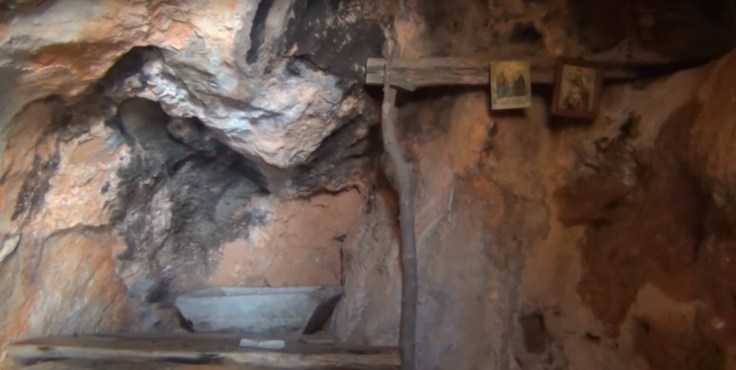
After turning to Christ, the Apostle Paul journeyed into the Arabian desert, and there he repented of his previous behaviour (Gal.1,17).
The Apostle, who knew this inner stillness of the nous, gave much advice to his disciples. Sensing that Christians who have been united with Christ have the nous of Christ, he wrote: “But we have the nous of Christ” (1Cor.2,16). In another place he exhorts: “Put to death your members which are on the earth” (Col.3,5). By the grace of God the Apostle saw the inner law in his members warring against the law of his nous (Rom.7,23).
In the Apostle’s teaching, importance is given to watchfulness, that is, spiritual vigilance not to let one’s nous be captured by an external evil power: “Therefore let us not sleep as others do, but let us watch and be sober… let us who are of the day be sober…” (1Thess.5,6-8). He exhorts the Apostle Timothy: “But you be watchful in all things” (2Tim.4,5).
And on the subject of prayer he is clear. Prayer should go on unceasingly in the hearts of Christians. “Continue earnestly in prayer, being vigilant in it with thanksgiving” (Col.4,2). “Pray without ceasing” (1Thess.5,17).
The Apostle Peter gives the same commandments, thus showing that the members of the Church have a common life. “Be sober, be vigilant; because your adversary the devil walks about like a roaring lion, seeking whom he may devour” (1Pet.5,8).
All these things show that practically all Christians can attain stillness and thereby also vision of God. On this point too the Fathers are absolute and expressive.
Peter of Damascus writes: “For all men need this devotion and stillness, total or partial, and without it, it is impossible to attain any humility and spiritual knowledge” (31).
In this teaching of Peter of Damascus we need to note the words “all men need this devotion and stillness”. If this is supposed to be the case with all men, it is much more so with monks. It is inconceivable that there should be a monk who does not devote time to participating in godly hesychia. We say this because there have always been different ideas in a few circles, especially among those who, if they come upon monks struggling to achieve this godly “hesychia”, call them deluded. For this reason we shall take the opportunity to say a number of other things in the next section. The other point which must be emphasised is that “without it, it is impossible to attain any humility and spiritual knowledge”. It is the only method and the only way of knowing God, as we mentioned previously, according to the teaching of St. Gregory Palamas.
Some people maintain that hesychia in the way described by the Fathers is inaction, not action. In reality the opposite is the case. Hesychia is very great action in invisibility and silence. The person is in repose and stillness in order to speak with God, in order to allow himself his freedom and to receive God Himself. And if we consider the fact that the greatest problems which torment us are psychical and internal, and if we think that most illnesses (psychological and physical) originate from the elaboration of thoughts, that is, from impurity of the nous and the heart, we can understand the great value of noetic hesychia. So it is action and life. Hesychia offers the indispensable conditions for loving one’s brothers dispassionately, for acquiring selfless and dispassionate love. “He who is not attracted by worldly things cherishes stillness. He who loves nothing merely human loves all men” (St. Maximos the Confessor) (32). How can one have selfless love, which is one of the aims of the spiritual life, when one is possessed by passions?
So the hesychastic life is a life of intense activity, but a genuine and good activity. “The stillness of the saints should not be regarded as indolence, but as a form of intense activity. Moreover God is revealed in a similar way in his relations with men. The movement of God towards men is not only a movement of manifestation, but also a movement of revelation. It is not only revelation of a word but also an expression of stillness. That is why man, in order to come nearer to God, is not satisfied only to receive His revealed energies but must also advance towards receiving in silence the mystery of His unknowing. It is not enough to hear His word, but one must also advance towards the unhearing of His stillness. This second part leads to perfection, and so the first is presupposed. In fact, as St. Ignatios the Godbearer observed, only `he who has truly acquired the word of Jesus can also hear His stillness, so as to be perfect’. So then the movement of man towards God should not be only a movement of action, but also a movement of hiddenness; it should not only be a witness of confession, but also a witness of silence and stillness” (33).
Therefore the Fathers speak of “fruiting stillness”. When rightly practiced it offers great help to a person, it reshapes his personality, renews his being, unites it with God. Then his social relationships are set right as well. When a man acquires love for God he also acquires love for mankind.
So far we have explained as best we could what hesychia is, what are its characteristics and how indispensable it is for our spiritual life. It is recommended by all the Fathers as the best method of purification and returning to God. Moreover, as we have pointed out, Orthodoxy is a therapeutic science which aims to cure man’s illnesses. This should never be overlooked, because to do so would be to destroy the whole essence and content of Christianity. Purification, a necessary precondition for deification, is attained through the method of Orthodox devotion in which hesychia has a very important place.
This whole method and its way of life is called hesychasm. That is to say, the person struggling in an atmosphere of stillness is called a hesychast, and this way of living in stillness is called hesychasm. We certainly know hesychasm as a theological movement of the fourteenth century, mainly represented by St. Gregory Palamas, which uses a particular psychosomatic method and seeks, with the help of divine grace, to unite the nous with the heart and so to live in communion with God. St. Gregory maintained that this goes on in the body as well. That is to say, the body too can acquire experience of the life of God. Barlaam, on the contrary, without knowing this method, became its opponent, with the result that he was condemned by the Church and finally removed from the Orthodox sphere. The hesychastic conflict, as it was called, ended with the Councils which took place in Constantinople in 1341, 1346 and 1351. The last Council, which “justified” Palamas, proponent of the hesychastic life, is considered to be Ecumenical: “We think that the Council of Constantinople in the time of Saint Gregory Palamas in 1351, judging at least on the basis of its great theological work, can be and deserves to be counted among the Ecumenical Councils of the Orthodox Church, to which it is in no way inferior as to the soteriological significance of its theology. This Council constitutes the proof of the continuing conciliarity of the Orthodox Church and of the living experience and theology concerning salvation in Christ” (34).
However, this hesychastic movement did not make its first appearance in the fourteenth century but has existed since the first centuries in the life of Church. We find hesychia in Holy Scripture, in the first Fathers of the Church. We have already mentioned examples of Fathers from all the centuries of the history of the Church. We mentioned St. Ignatios the Godbearer, St. Basil the Great, St. Gregory the Theologian. St. Maximos the Confessor, St. Thalassios, St. John of the Ladder, St. Symeon the New Theologian and St. Gregory Palamas. St. Gregory Palamas was not the introducer of hesychasm, but its exponent, the one who lived and expressed this whole holy journey of the soul. So hesychasm constitutes the authentic form of the Christian life.
However, we also use the term hesychasm to characterise the method used to concentrate the nous in the heart. This is a very large subject and I would like simply to point to a few topics.
In the effort to be purified, a man’s nous “stands prayerfully in the heart”, constantly repeating the single-word Jesus prayer. It is not busied with many words. It unceasingly recalls the Name of Jesus Christ. At the same time the nous watches to see that thoughts do not enter the door of the heart. So, as St. Maximos the Confessor says, watchfulness is linked with the prayer.
“But the nous can still more deeply penetrate into the heart when, by divine impulse, it so unites with the heart as to be divested of all images and concepts, while the heart is closed against every foreign element. Then the soul penetrates into the `darkness’ of a quite especial nature, and is subsequently deemed worthy of standing ineffably before God with a pure nous” (35).
Many methods are used for attaining this concentration and the return of the wandering nous to the heart. It is essential that the method we use should be combined with repentance because otherwise it degenerates into a mechanical method.
In his sermon for the Sunday of the Publican and the Pharisee St. Gregory Palamas presents the prayer of the Publican, the way in which he prays, as the type of the hesychast’s prayer. He refers to the Gospel: “The tax collector, standing afar off, would not so much as raise his eyes to heaven, but beat his breast, saying: `God be merciful to me a sinner’” (Lk.18,13). Interpreting this passage, St. Gregory says that the word used here for `standing’ shows the long continuation of the standing, together with the persistence of the supplication and the penitential words. The Publican said “God be merciful to me a sinner.” Nothing more. “Neither intending nor considering anything else, he was paying attention only to himself and God, rotating his prayer on itself, multiplying only the simple entreaty which is the most efficacious type of prayer.” One sees here the value of the simple prayer “Lord Jesus Christ, Son of God, have mercy on me.” The hesychast, like the Publican, thinks about absolutely nothing, but concentrates his nous on the words of the prayer. Palamas interprets Christ’s words that the Publican `would not so much as raise his eyes to heaven’ by referring to the figure of the hesychast: “This standing was at the same time both standing and submission, and signified not only a lowly servant, but also one condemned.” By this manner and figure the Publican showed “right condemnation and self-reproach, for he regarded himself as unworthy of both heaven and the earthly temple”. The fact that he beat his breast also shows the participation of his body in the pain and sorrow of his soul. “Beating his breast, out of extreme compunction, and thus presenting himself as worthy of punishment, groaning with deep mourning, and bowing his head like one condemned, he called himself a sinner and with faith begged for mercy” (36).
It seems clear here that the parable of the Publican and the Pharisee was used by Christ, and also by St. Gregory Palamas, interpreting the parable `hesychastically’, to present stillness and prayer as the best way to receive mercy from God. It is the most perfect prayer. It is prayer of a single word, it contains deep penitence, the body participates in the prayer since it too will receive the grace of God, and the prayer has an atmosphere of self-reproach and just condemnation.
Because the heretic Barlaam derided the hesychasts of his time for using a particular bowing of the head and body to achieve concentration of the nous and a uniform development of the powers of the soul, St. Gregory referred to the case of the prophet Elijah, who prayed to God with his head between his knees: “And this Elijah, perfect in vision of God, with his head on his knees, thus assiduously collecting his nous to himself and God, relieved the many years’ drought” (37). Then St. Gregory recommended a way of concentrating the nous: “…for the eye not to turn here and there, but somehow, resting on the right breast or the navel, to send the power of the nous which was scattered through looking outward, back into the heart, through the body’s being in that position…” (38).
Referring to this subject of how to pray, St. Gregory of Sinai recommends: “In the morning, sitting on a low stool, force your nous to descend from your head to your heart and hold it there; bending painfully, and with your chest, shoulders and neck very sore, cry out ceaselessly in your soul and spirit: `Lord Jesus Christ, have mercy on me’”. He also says we should restrain the breath in order to concentrate the nous. “Restrain the inhaling of breath so that you do not breathe unhindered, for air in motion, going up from the heart, darkens the nous and ventilates the reason, taking the nous away from the heart” (39).
There are other patristic witnesses on this subject. (40)
In another place too St. Gregory of Sinai describes the method of prayer which concentrates the nous and is called hesychasm. “Sometimes, most often, because it is tiring, sit on a stool; sometimes again, more seldom, temporarily lie outstretched for some relaxation . Your sitting should be in patience, `persisting in prayer’. Do not give in to faint-heartedness because of the laborious effort, but labour in your heart and drive your body, seeking the Lord in your heart. Compel yourself by every means to do this work. For `behold’, said the Prophet, `pangs have taken hold of me like the pangs of a woman in labour’. But bending from below and gathering your nous in your heart, if it has indeed been opened, call on the Lord Jesus for help. Even if your shoulders are weary and your head is often in pain, persevere in these things with diligence and love, seeking the Lord in your heart. For `the kingdom of heaven suffers violence, and the violent take it by force’. With these words the Lord showed us how truly to persevere in these labours. For patience and perseverance in everything generate labours of both body and soul” (41).
We must emphasise the fact that the value of noetic hesychia, unceasing prayer, repetition of the single-word Jesus prayer, the special way of concentrating the nous and uniting it with the heart, the standing of the body during prayer and the confining of the senses, the teaching that the grace of God is uncreated and that a person can receive it in his heart, that the light of Tabor is higher than human knowledge and not “inferior to thought”, all of which define what is called hesychasm, have been “justified” by the Council of Constantinople and consequently one who speaks against these things is no longer within the Orthodox tradition and at any rate creates preconditions for being cut off from its life.
Since we have already seen briefly what hesychia is and what hesychasm is and that hesychasm has been confirmed by a Synod which can rightly be called Ecumenical, let us take a brief look at the anti-hesychastic method for knowing God and the anti-hesychastic way of life, which unfortunately prevail in our time and which show that these are evil days.
“Hesychia has always met with antagonism, especially in the West. Lacking the necessary experience, its opponents argue in the abstract and go so far as to see in the practice something mechanical, some spiritual technique leading to vision of the Divine” (42).
Unfortunately this life of the West has also influenced Greece itself, so that we have a serious distortion of the Orthodox tradition. To be sure, many people assert that we have been changed by the Western spirit, and they have mainly located this change at various other points, such as habits and customs. I believe, however, that the greatest change has taken place in the matter of hesychia and hesychasm. Hesychia is regarded as an antiquated method, as a life of inactivity, and not suited to our day, which is an age of action. Unfortunately these conceptions prevail even among people who wish to live in the Orthodox tradition. Our time is a time of action. “The contemporary world is not a world of recollection and stillness but one of action and struggle” (43). In an age like ours, which is hedonistic and self-gratifying, hesychasm cannot find an echo. It is happening as St. John of the Ladder said: “A fish turns swiftly from the hook. The passionate soul turns from solitude” (44). A pleasure-loving age is very anti-hesychastic. A nun said to me that in our time a “hot anti-hesychastic wind” is blowing which is burning everything. And I think that this judgement is absolutely true. This is the contemporary reality. The atmosphere prevailing today is rather the atmosphere of Barlaam and not that of St. Gregory Palamas.
Today theology is being developed through the elaboration of logic. It has become simply a logical system. I would characterise it as philosophical. It is a history of theology. It is not a fruit of hesychia and participation in God. This is why many errors and many differences in theological thoughts and views have appeared. Today most of us do not live theology as a therapeutic science, as I said before. We do not recognise the way of Orthodox devotion. If we read the Philokalia, where the most representative texts relating to the method of theology are concentrated, we see that most of them speak of how to cure passions. They do not make analyses, nor are they content with presenting the higher states, but at the same time they describe the ways we must employ in order to be cured of passions. I believe that it is a fundamental shortcoming of contemporary theology that it has not taken enough interest in the Philokalia. Perhaps a special chair should be established for introducing asceticism and hesychasm, based on the texts of the Philokalia.
Beyond these things, there is need of personal experience of the method of Orthodox theology as described in the patristic texts.
What Archimandrite Sophrony says is very characteristic in showing the difference between conjectural theology and that which takes place in God: “Unless the heart be cleansed it is impossible to attain real theoria [vision]. Only a heart purified of passion is capable of that peculiar awe and wonder before God which stills the nous into joyful silence.
“The theologian thinker aims at theoria by one means, the monk ascetic by another. The main object of the monk is to achieve the stillness of prayer in the heart, with the nous free from reflections, keeping quiet watch like a sentry to make sure that nothing enters into the heart from without. Where this state of sacred silence exists, heart and nous feed on the Name of Christ and His commandments. They live as one, controlling all happenings within, not by logical investigation but intuitively, by a specific spiritual sense.
“So soon as the nous unites with the heart it can see every movement in the realm of the subconscious. (Here we use this term from contemporary scientific psychology in a conventional way.) While the nous dwells in the heart it perceives the images and thoughts around it proceeding from the realm of cosmic being which attempt to seize heart and nous. The attack of intrusive thoughts is fierce. To weaken their onset the monk is constrained the livelong day not to admit a single passionate consideration, not to allow himself a predilection of any kind. His constant aim is to reduce the number of outside impressions to its very minimum. Otherwise at the time of inner noetic prayer all the impressions of the day will crowd unrestrained into his heart, causing the greatest disturbance.
“The monk’s purpose is to achieve continual vigilance of the nous in the heart; and when, after long years of such striving – which is the most difficult of all ascetic feats, harder than any other – the heart becomes more sensitive, while the nous, from much weeping, receives strength to thrust off the slightest hint of a passionate thought, then one’s prayerful state can continue uninterrupted, and the feeling of God, present and active, becomes powerful and plain” (45).
Orthodox theology needs to be imbued with this hesychastic method in order to be really Orthodox and not academic. Efforts are being made in this area. But the problem remains essentially a problem. Does contemporary theology speak of tears and mourning, self-reproach and humility? Does it regard as a way of knowing God “to make the nous and the world stand still, forget things below… lay aside meanings for what is better?” Does it presuppose that for us to attain communion with God, “we should abandon everything sensory along with sensation, rising high above thoughts and reasonings and all knowledge and thought itself, wholly surrendered to the energy of spiritual sensation, which Solomon called a sense of the divine, and reaching the unknowing above knowledge, that is, above every form of the much talked-of philosophy…” (46)?
I believe that on the contrary, contemporary theology is conjectural, rationalistic. It is based on the `wealth’ which is reason. What Archimandrite Sophrony says is characteristic: “One other kind of imagination about which we wish to speak, is the attempt of intelligence to penetrate the mystery of being and apprehend the Divine world. Such endeavours inevitably involve the imagination, to which many are inclined to give the high-flown label, divine inspiration. The ascetic, devoting himself to active inner silence and pure prayer, resolutely combats this `creative’ impulse within himself because he sees in it a `processus’ contrary to the true order of being, with man `creating’ God in his own image and likeness” (47).
Archimandrite Sophrony also writes: “The theologian who is an intellectual [logician] constructs his system as an architect builds a palace or a church. Empirical and metaphysical concepts are the material he uses, and he is more concerned with the magnificence and logical symmetry of his ideal edifice than that it should conform to the actual order of things.
“Strange as it may seem, many great men have been unable to withstand this [rationalism], in effect, artless temptation, the hidden cause of which is pride.
“One becomes attached to the fruits of one’s intelligence [rationalism] as a mother to her child. The intellectual [logician] loves his creation as himself, identifies with it, shuts himself up with it. When this happens no human intervention can help him – if he will not renounce what he believes to be riches, he will never attain to pure prayer and true theoria” (48).
This [above] is Barlaamite theology and not Palamite-Orthodox theology.
Likewise today there is a prejudice against the Jesus prayer and the way it is said. Certainly we must say that we have a flowering of prayer, of efforts to publish the works of the Fathers and writings about prayer, but at the same time one observes that people are ignorant of these things and are unable to approach the life of prayer. Most of the reading is done in order to be in fashion. Or again we find that `spiritual’ men are ridiculing the hesychastic life, or worse, preventing people under their guidance from engaging in these things. The view that “these things are not for us”, and so forth, is heard repeatedly. Many think that for people to take several minutes in the morning and several minutes in the evening to say an improvised prayer or read a few services with suitable passages is enough. What is more, even the holy atmosphere of hesychia, that is, compunction, self-reproach and mourning, are regarded as unsuitable for the laity, in contrast to what the Fathers say, as we have shown.
Worst of all is the fact that this `worldly’ attitude, the anti-hesychastic life, is even dominating the monks, it has crept even into the monasteries, which were supposed to be “schools dedicated to God”, to be the medical schools where medical science would be taught. An attitude of [speculation] prevails that we must know about those things but they are not for us! I have personal knowledge that “prominent” monks who have responsibility for Orthodox guidance of young monks characterise all the subjects related to the hesychastic life as `fables’, as not worth speaking about, as cases of delusion!!!
This is really sad. “Hesychia has from the beginning been a characteristic mark of Orthodox monastic life. Orthodox monasticism is also hesychasm at the same time” (49).
Fortunately, now at last we can see an attempt to return to the Fathers. And by this we mean an attempt to live the life of the Fathers, mainly the hesychastic life. There are many young people disenchanted with the contemporary climate of struggle and anguish, of action without stillness and mission without silence, who are turning more towards the hesychastic life and are being nourished by it. Many people with such desires are coming to monasticism and are continuing to live by the springs of the holy Fathers, that is the Orthodox tradition. Even in the world, centres of living in stillness are being created.
This life should be developed and increased in the cities too. This is how I see the organisation of Church and parish life. Thus we will come to understand that the Church is a place where souls are healed, but also a place of theophany. Within purification there comes knowledge of God, vision of God. Perhaps each person should to the best of his ability cultivate the Jesus prayer, which can be the teacher for his whole spiritual life. It will teach us when to speak and when to be silent, when to interrupt prayer in order to help our brother and when to continue it, when we have sinned and when we have God’s blessing. Likewise we must struggle to keep and preserve a pure nous.
St. Thalassios’ exhortation should become a rule of life: “Enclose your senses in the citadel of hesychia so that they do not involve the nous in their desires” (50).
The words of St. Gregory the Theologian which we quoted at the beginning should be regarded as a basic aim of life: “It is necessary to keep silence in order to come into pure contact with God and to minimise any delusion of the soul” (51).
We must be well aware that this hesychia is “indeed the true and unerring mode of life in God, as handed down to us by the Fathers”, according to the Fathers Kallistos and Ignatios Xanthopoulos.
I would like to end these thoughts about hesychia with the teaching of Kallistos and Ignatios of Xanthopoulos: “This way, this spiritual life in God, this sacred practice of true Christians is the true, unerring and genuine secret life in Christ. Sweetest Jesus, the God-Man, laid this path and gave it His mysterious guidance; the divine Apostles trod it, as well as those who came after them. From the very beginning, from the first coming of Christ on earth up to our time, our glorious teachers who followed Him, shining like lamps in the world with the radiance of their life-bearing words and wonderful deeds, have transmitted to one another right up till today this good seed, this sacred drink, this holy germ, this inviolate token, this grace and power from above, this precious pearl, this divine inheritance of the Fathers, this treasure buried in the field, this betrothal of the Spirit, this kingly symbol, this springing water of life, this divine fire, this precious salt, this gift, this seal, this light, and so on. This inheritance will continue to be so transmitted from generation to generation, even after our time up to the very second coming of Christ. For true is the promise of Him Who said: `I am with you always, even unto the end of the world. Amen’” (52).
(Source: https://spiritualtravelsgr.blogspot.com/2018/06/hesychia-our-method-of-true-healing.html)
 Novo Scriptorium
Leave a comment